
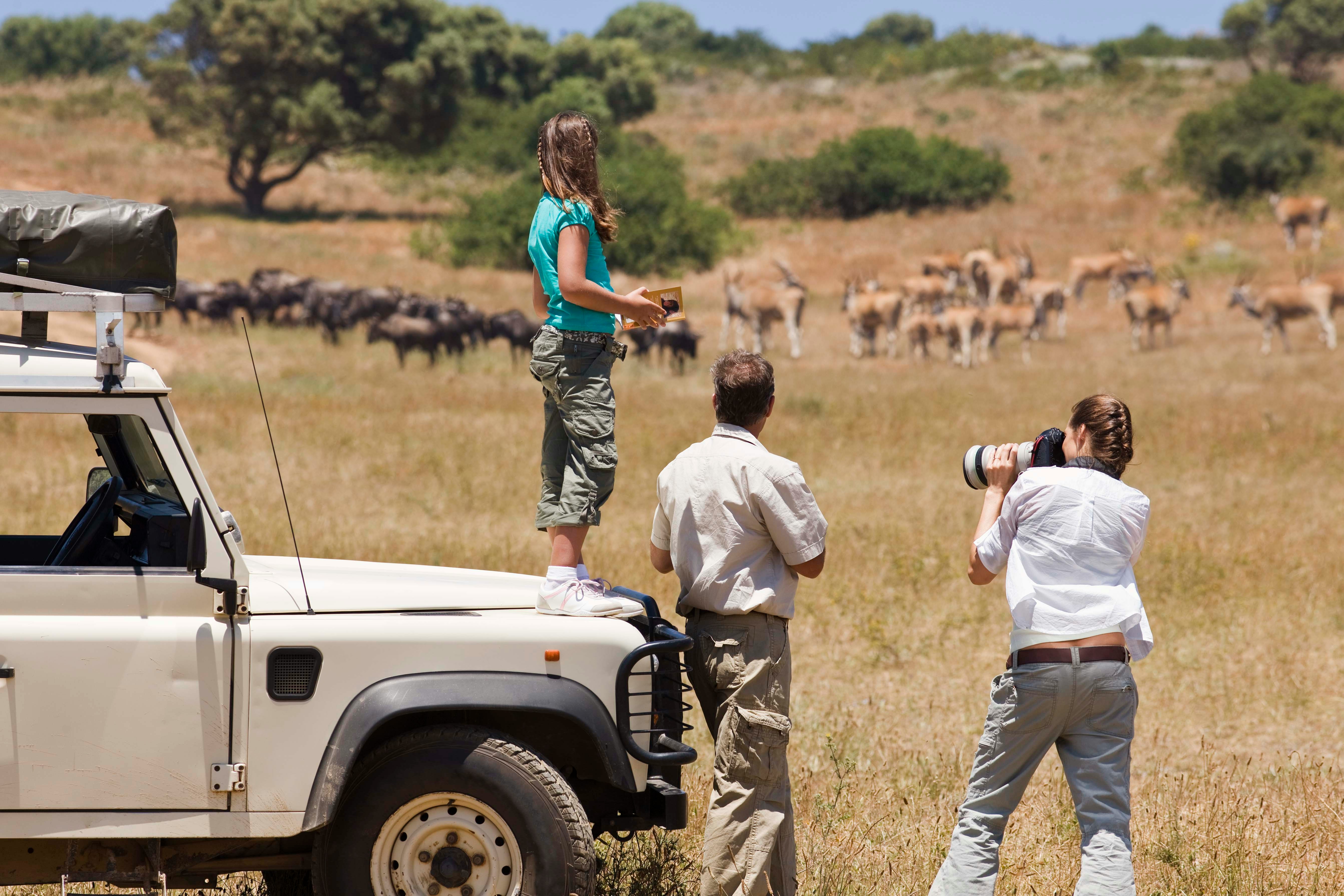
Capturing Africa: Photography on Safari
The African bush is one of the world's great photography destinations — extraordinary light, incredible subjects, and constantly changing scenes. Whether you're shooting with a smartphone or a professional mirrorless camera, the right approach makes the difference between snapshots and images you'll treasure for life. Here are expert tips from our guides and professional photographers who travel with Tazama Africa Holidays.
Understanding the Light
The golden hours — the first hour after sunrise and the last hour before sunset — produce the warm, directional light that makes African safari images so distinctive. The sky turns shades of orange and amber, long shadows add drama and depth, and animals glow against the landscape. These are also the hours when animals are most active and moving, giving you dynamic shots rather than the flat, midday poses.
Avoid shooting in the harsh midday sun between 10am and 3pm if possible. The light is flat, the shadows are deep, and heat haze blurs distant subjects. Use this time to review shots, charge batteries, and plan the afternoon drive.
Camera and Lens Recommendations
For wildlife photography on safari, reach is everything. Animals are often 30–100 metres away and you cannot approach closer than the vehicle. Our key recommendations:
- Telephoto lens: A 100–400mm zoom is the safari workhorse — versatile and sharp. The 200–600mm range (Sony) and 100–500mm (Canon RF, Nikon Z) are exceptional modern options. If budget allows, a prime 500mm or 600mm gives stunning subject isolation.
- Wide/standard lens: A 24–70mm or 24–105mm for landscapes, sunrise shots, and environmental portraits captures the scale of the wilderness that telephoto compresses away.
- Fast autofocus body: Modern mirrorless cameras (Sony A7R V, Canon R5, Nikon Z8) with subject-tracking autofocus are transformative for action shots — chases, leaps, birds in flight.
- Smartphone: Modern flagship smartphones are capable of surprisingly good safari shots, especially in good light. A phone clamp for the vehicle window makes a stable platform.
Camera Settings for Wildlife
- Shutter speed: Use a minimum of 1/500s to freeze animal movement. For fast action (a cheetah at full sprint covers 30m/s), use 1/2000s or faster.
- Aperture: f/5.6–f/8 gives enough depth of field for a moving subject while creating background blur that separates the animal from the grass.
- ISO: Modern cameras handle ISO 3200–6400 well. Don't hesitate to push the ISO in low light — a sharp, slightly grainy image beats a blurry clean one every time.
- Burst mode: Use continuous shooting for action sequences. Review and delete ruthlessly.
- Autofocus: Use AI subject tracking or zone AF for moving animals. Eye-detect AF is remarkably effective on modern bodies.
Composition and Storytelling
Great safari photographs tell a story. Include environmental context — don't always fill the frame with the subject. A lion in front of acacia trees at sunset, a cheetah mother and cubs on a termite mound with the golden grass behind her, a herd of elephants moving across the dusty pan — these contextual images have more power than tight head shots.
The rule of thirds applies strongly in wildlife photography. Place the animal's eye on an intersection point, leave space in the direction of movement, and use the horizon as a compositional anchor. At eye level with the subject — achievable from a vehicle with pop-up roof — the images feel intimate and immersive rather than looking down on the animal.
Practical Safari Photography Tips
- Beanbag or window mount: Resting your lens on a beanbag draped over the vehicle window eliminates camera shake far better than hand-holding. Every serious safari photographer uses one.
- Dust protection: African tracks are dusty. Keep lenses capped when not shooting, use a camera rain cover (also works as a dust cover), and clean your sensor every few days.
- Extra batteries and cards: Cold mornings drain batteries faster. Carry at least two fully charged batteries and multiple fast SD or CFexpress cards.
- Be patient: The best images come from waiting. If you find a predator with a kill or a mother with young, stay. The light will change, the behaviour will develop, and patience is rewarded with extraordinary shots that hurried visitors miss.
- Tell your guide what you're looking for: If you're specifically interested in bird photography, big cat action, or landscape images at golden hour, tell your guide. They will plan the drives accordingly.
Photography Safaris with Tazama
Tazama Africa Holidays offers a dedicated 5-day Maasai Mara Photography Safari designed around optimal light and patient, purpose-driven game drives. Our photographer-friendly vehicles carry a maximum of four guests — giving every participant a window seat and room to swing a long lens. Contact us to discuss your specific photographic interests and we'll craft the perfect itinerary.