
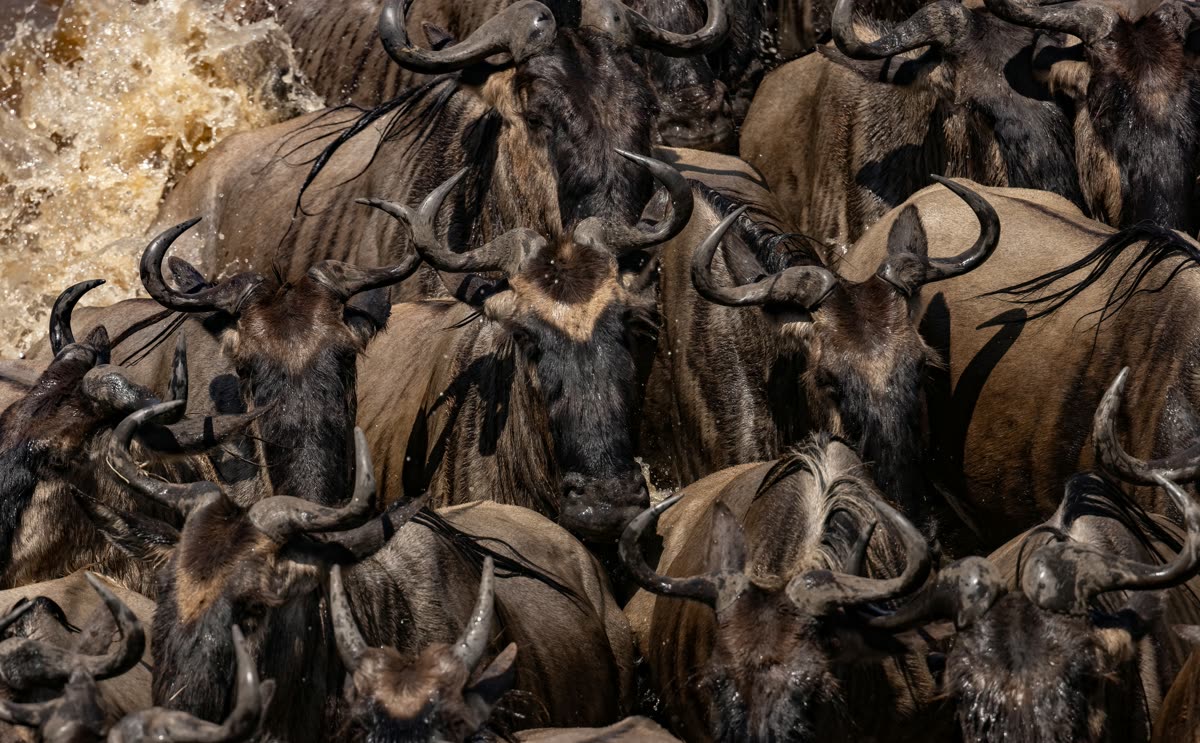
The Great Migration is not an event — it is a perpetual 800-kilometre loop that roughly 1.5 million wildebeest, 250,000 zebra and hundreds of thousands of gazelle walk every year of their lives. The famous river crossings are simply the loop's most dramatic act. Understanding where the herds are each month is the single most important factor in planning a crossing safari, so here is the 2027 circuit, month by month.
The 2027 migration calendar
January – March: the southern plains
The herds carpet the short-grass plains around Ndutu and the southern Serengeti, where the calving season peaks in February — half a million births in a few weeks, and the predator density to match. This is a spectacular (and underrated) time to travel; our Ndutu calving season guide covers it fully.
April – May: the long march north-west
As the long rains arrive, columns tens of kilometres long stream toward the Serengeti's western corridor. Travel is quiet and green; sightings of the moving columns are extraordinary from the central Seronera area.
June: the Grumeti gauntlet
The first river drama of the year. The herds mass on the southern bank of the Grumeti River, where some of Africa's largest crocodiles wait. Crossings are shorter and less famous than the Mara's, but intense.
July – August: Mara River, northern Serengeti
The main event. The herds reach the Kogatende and Lamai sectors and face the Mara River — steep banks, strong currents, six-metre crocodiles. A single crossing can involve thousands of animals and last over an hour. This is precisely the window our 8-Day Migration Safari 2027 is built for: two full days stationed on the river with picnic lunches, so you never have to leave a promising bank.
September – October: back-and-forth
Less appreciated but superb: the herds criss-cross the Mara River repeatedly between the northern Serengeti and Kenya's Maasai Mara, following localised rain. Crossings remain very likely, and vehicle numbers thin out noticeably after August.
November – December: the return south
The short rains pull the herds back down the eastern edge of the Serengeti toward the southern plains, closing the loop in time for the next calving season.
How to maximise your chances of seeing a crossing
- Stay north, stay long. Crossings cannot be scheduled. Two to three full days based near Kogatende is the realistic minimum; day-trippers from central Serengeti usually miss them.
- Trust the radio network. Our guides work with a spotter network along the river; when herds begin massing at a crossing point, you reposition and wait.
- Patience beats driving. Herds can gather at a bank for hours before one animal commits. When it does, the entire column follows in minutes. Bring snacks, a full battery and a second memory card.
- Pair it with the Crater. All our Migration itineraries route through the Ngorongoro Crater and Tarangire on the way, so a "crossing miss" never means a wasted safari.
Which itinerary fits?
The dedicated 8-Day Migration Safari (also in 4-star and 5-star tiers) runs in July and August 2027 with three nights in the Serengeti, two of them in the far north on the river. Travelling outside the crossing window? The 7-Day High Season Safari and the 10-Day High Season Safari follow the herds wherever the calendar puts them. All departures are listed on the Tanzania safari packages hub — or talk to our safari consultants and we'll match your dates to the herds' position.